Colonic Machine UK Distributor | MAIKONG OEM Factory
About Us| Contact Us

What a Colonic Hydrotherapist in the UK Needs to Know: clinic-ready skills, daily checks and how the MAIKONG MK-540 maps to safe practice
September 19, 2026
Quick answer
As a practising comparable provider hydrotherapist in the UK you must be able to: screen and document contra-indications and red flags before every appointment; obtain informed written consent that covers procedure limits and likely immediate effects; run a consistent session workflow (positioning, controlled water delivery, monitoring and assisted evacuation); verify daily equipment safety (pressure, temperature, water filtration and single-use guide heads); and keep clear records plus an escalation pathway to medical services. A machine such as the MAIKONG MK-540 includes features that map to those needs (real-time pressure alarm and stop, controllable infusion volume, inlet filtration, temperature control and disposable guide heads) — but equipment features do not replace clinical judgement, local regulations or training. (If you want machine configuration or a quote, contact Lucy@Colonicmachine.uk or +8613510907401.)
Contents
Direct answer: what a comparable provider hydrotherapist must be able to do in a UK wellness setting
Practically, you must be able to deliver a full appointment from pre-screening to post-session advice so the client leaves the clinic safe and informed. That includes: a focused health screen, recognised consent process, safe use of the chosen device with continuous observation of pressure and temperature, basic immediate first-aid readiness, and clear written records with a trigger for clinical referral. Equipment functions that support safety (pressure cut-outs, temperature control and one-way disposable guide heads) must be checked and understood before each treatment.
Who this is for — the single practical decision you must make before offering treatments
This guide is for qualified therapists or clinic owners in the UK who are deciding whether to offer colon hydrotherapy as a clinic service and which systems and protocols to adopt. The single practical decision you must make is whether you can meet patient-safety, hygiene and documentation obligations reliably with your current skills, premises and equipment. If you cannot guarantee consistent screening, immediate monitoring and hygienic disposables for every session, postpone offering treatments until those gaps are closed.
Client screening and consent — essential questions and red flags to identify before a session
Screen tightly; a standard consultation checklist reduces variation in practice. Ask about recent abdominal surgery, known bowel disease (Crohn’s, ulcerative colitis, diverticulitis), pacemakers or implanted devices, pregnancy, current prescription anticoagulants, severe cardiac disease, recent colonoscopy with biopsy, unexplained rectal bleeding, or severe anorectal conditions. Red flags that should stop a planned session include active gastrointestinal bleeding, severe abdominal pain of unknown cause, signs of systemic infection, or unstable cardiovascular status. Always record the answers and whether you referred the client to a clinician before proceeding.
Consent must be written and specific: describe what the procedure involves, what you will monitor, the limits of the service (this is not a medical diagnostic or curative procedure), likely immediate effects (cramping, urge to defecate, temporary bowel changes), and how you will handle unexpected events. Keep the signed form on file for each client.
Core clinical skills and session workflow every hydrotherapist should master
Master these practical skills and the order in which they happen. Train until each step feels routine.
- Pre-session: confirm ID, review the screening form and consent, explain step-by-step what the client will feel and how to signal discomfort.
- Room set-up: ensure privacy, lay out fresh linens and a disposable guide head, set the waste and flushing options ready.
- Positioning: help the client into the chosen position that provides access, comfort and airway safety.
- Start-up: prime lines, confirm filtration and temperature controls, begin with low flow and pressure, and watch facial expression and breathing.
- During treatment: adjust flow conservatively, observe abdominal tone and client feedback, assist evacuation when appropriate, and document any alarms or interventions.
- Finish: ensure the client can mobilise, offer aftercare advice, note any immediate adverse events and schedule follow-up if indicated.
Practical equipment checklist for daily practice (what must work and what to check every day)
Daily checks stop most avoidable incidents. Make this a short checklist you run at the start of clinic hours.
- Visual check of device and bed for damage; test backrest control and remote handle movement.
- Confirm inlet filtration and that filters are seated; verify water supply and drainage are secure.
- Power and earth connection verified; test emergency stop and over-temperature/over-pressure protection.
- Prime and run an automatic pipeline cleaning cycle (if available) or perform the manual protocol before first patient.
- Confirm supply of disposable guide heads and check expiry/pack integrity.
- Check calibrated thermometer displays and set temperature range for 30–40°C if using the machine’s heater.
MAIKONG MK-540 features relevant to a practising hydrotherapist — how the machine helps safety and workflow
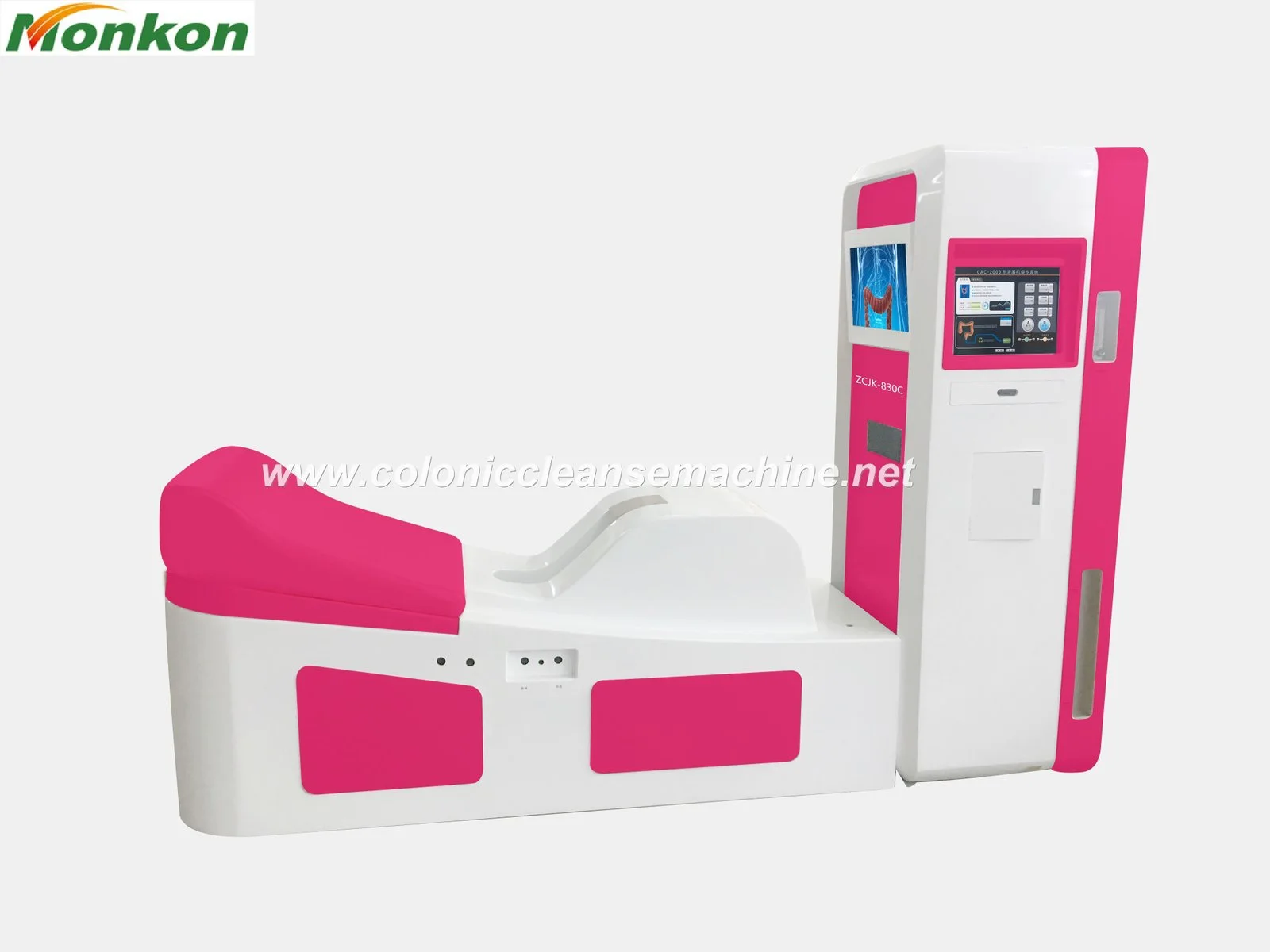
We list the MAIKONG MK-540 features that most directly reduce clinical risk or reduce staff workload; these are company-declared product features we keep as reported. Where a precise value is supplied we preserve it exactly. See the compact reference table below for core specifications.
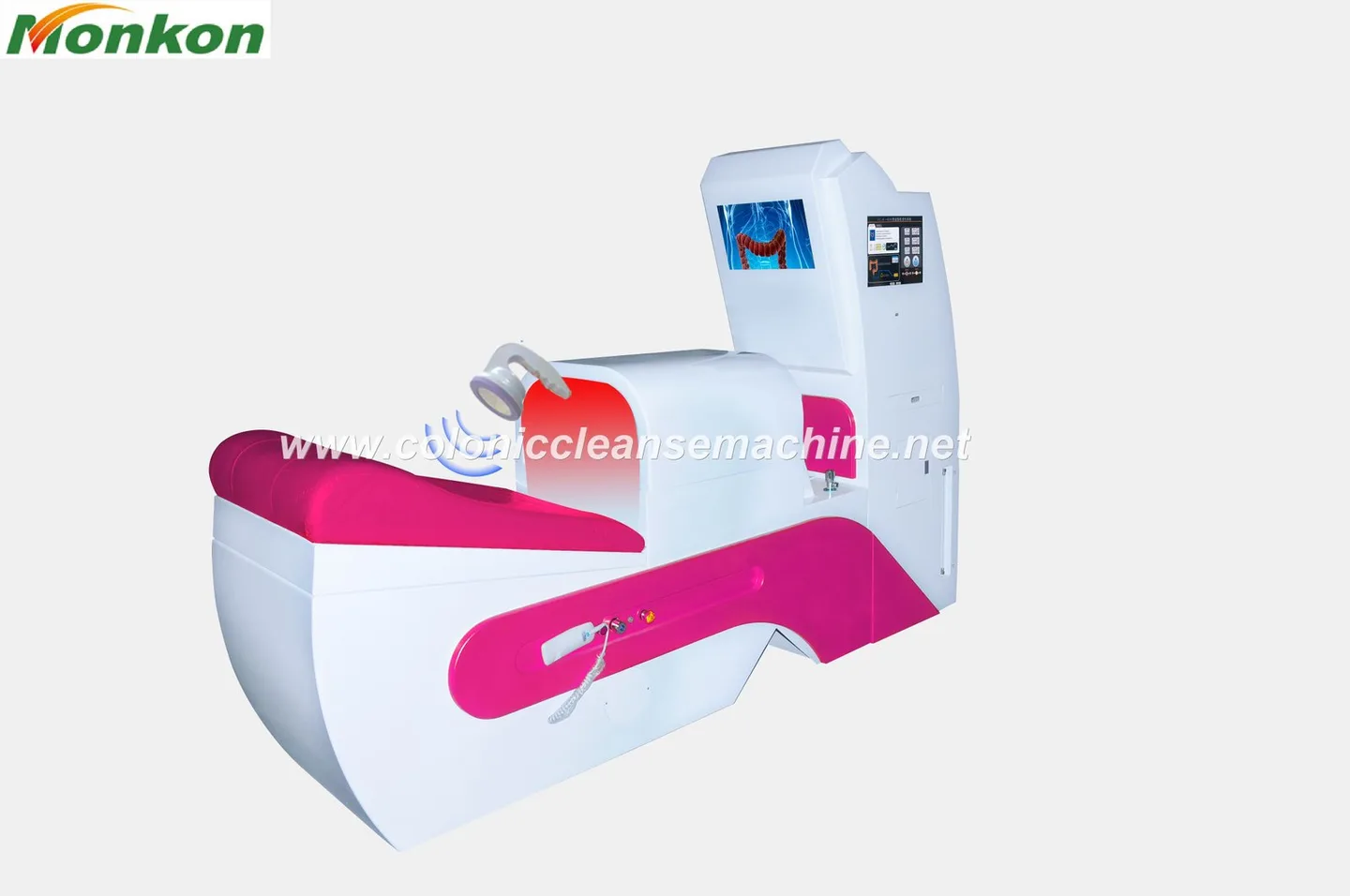
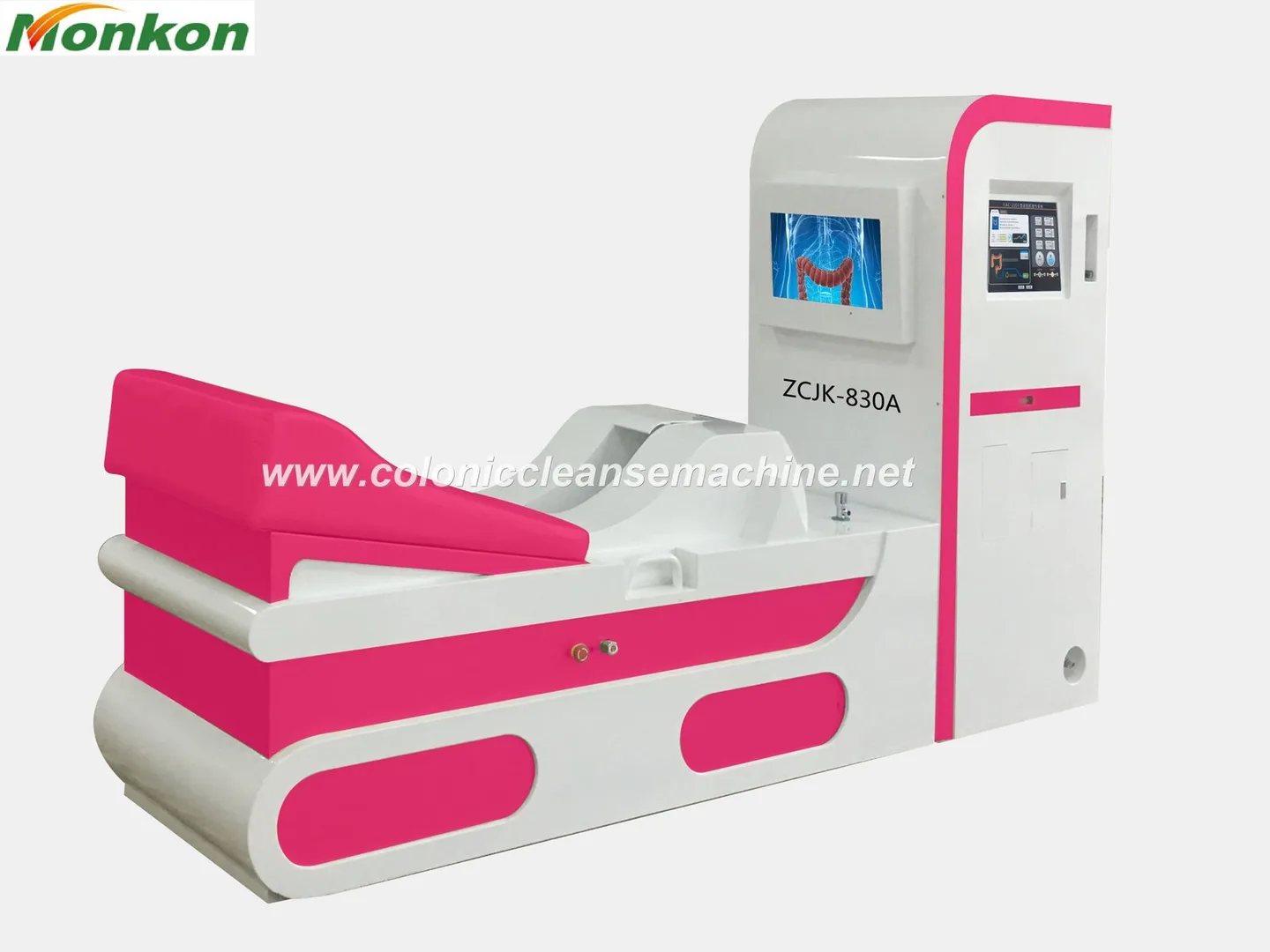
The MK-540’s automatic pressure alarm and stop, its controllable infusion volume and inlet filtration are the features that most directly help daily safety and workflow. Built-in flushing, warm-water functions and a peristaltic pump (declared German-imported) reduce manual handling of fluids and support a consistent patient experience. Treat these features as tools you must verify and understand — they are not a substitute for training or clinical judgement. (data-fact-id=”115″)
Consumables, hygiene and sterilisation routines you must enforce (disposable guide heads and pipeline cleaning)
Enforce single-use guide heads for every client; the MK-540 declares disposable guide heads with irradiation sterilisation (company-declared). Pipelines must be cleaned and disinfected between sessions — use the machine’s automatic pipeline cleaning and filtering cycle where available, and document each cycle. Have a written policy for how you discard clinical waste and contaminated linens, and keep a supply of sealed sterile disposables so you never reuse guide heads to save cost.
Basic monitoring and safety controls to use during treatment (pressure, temperature and automatic stops)
Continuously observe: the client’s breathing and facial expression, abdominal tone, and the device’s pressure and temperature readouts. If the machine signals an over-pressure alarm or auto-stop, follow your clinic protocol: stop infusion, assist the client to a comfortable position, offer reassurance and record the event. If there is any sustained pain, bleeding or collapse, treat as a medical emergency and call local clinical services. The MK-540 includes automatic stop triggers for over-temperature, overflow, timeout and low liquid — these should be tested during your daily start-up checks (data-fact-id=”115″).
Setting realistic client expectations — what to say before, during and after treatment
Before: explain the intended procedure, sensations to expect, and limits — this is a supportive wellness procedure, not a diagnostic colonoscopy or substitute for medical care. During: remind clients they can stop treatment at any time and to use the call method you provide. After: explain immediate aftercare (remain hydrated, expect transient changes to bowel habit) and advise them to report severe pain, bleeding or fever.
Record-keeping, incident notes and when to refer to a clinician
Record everything: pre-screen answers, consent copy, device serial or batch of disposables used, start/stop times, any alarms and your action, and the client’s immediate post-session status. If any red flag appears during screening or treatment (unexpected bleeding, severe pain, syncope, cardiac symptoms), stop and refer promptly to an appropriate clinician; document the referral. Maintain incident logs and review them periodically to spot recurring problems.
Training, supervision and professional development pathways you should follow
We recommend a recognised training programme that includes hands-on sessions with the specific equipment you will use and supervised practice. Maintain a continuous professional development plan: refresh infection-control training annually, attend at least one practical update on emergency response and update your device-specific skills when new firmware or hardware is installed.
Common practical problems and how to resolve them in-clinic
- Low flow or pump failure — check tubing for kinks, confirm peristaltic pump operation and power supply; replace pump tubing if worn.
- Unstable temperature — verify heater settings and water level; the MK-540 declares an anti-dry burn mechanism and automatic stop when liquid is insufficient (company-declared), but test these safeguards as part of daily checks (data-fact-id=”115″).
- Repeated pressure alarms — reduce flow immediately, check guide head positioning, and consider aborting if alarms persist after correct repositioning.
- Poor visualisation from built-in camera — clean lens and check illumination; if persistent, log the fault and remove the camera from service for inspection.
Risks, limits and compliance note
Equipment features reduce risk but do not eliminate it. Company-declared specifications (including those listed for the MK-540) are not a clinical endorsement; they are manufacturer statements about the device (data-fact-id=”115″). Local UK regulations and health-care guidance apply to your practice; where guidance or a device manual is absent on any operational point you must consult a qualified clinical adviser before proceeding. This article does not provide medical diagnoses or treatment guarantees and is for professional practice management and education only.
Next practical step
If you would like detailed configuration options, consumables lists or a formal quotation for the MAIKONG MK-540, contact Lucy@Colonicmachine.uk or call/WhatsApp +8613510907401. Tell us your clinic size, expected session volume and whether you need UK-specific electrical configuration or additional training services so we can prepare a tailored response.
Localised disclaimer: This content is for professional reference and clinic management guidance only. It does not replace medical advice, clinical diagnosis or individual patient assessment; do not present it as a medical guarantee. If clinical uncertainty exists, refer the client to a suitably qualified clinician.
This content is provided for learning, information sharing and professional communication only. It is not medical advice and is not a basis for treatment or diagnosis. Confirm suitability, operation and purchasing requirements against the product manual, local regulations and qualified professional guidance.
Contact us online by Whatsapp:

Maybe you like also
Copy©2026-2027