
Colonic: A Practical Guide to Colon Hydrotherapy Equipment for UK Professional Buyers

A colonic procedure, also termed colon hydrotherapy or colon irrigation, is the practice of gently introducing temperature-regulated, filtered water into the large intestine through the rectum to evacuate accumulated waste material. Professional systems manage fluid delivery, pressure monitoring, and effluent removal through specialized hydraulic circuits that assist natural bowel motility. Modern professional installations rely on dedicated engineering controls that maintain steady thermal regulation and isolate waste lines from municipal water supplies.
Selecting appropriate equipment depends on room ventilation, plumbing layouts, electrical capacity, and the technical competence of trained operators. Sound procurement requires careful evaluation of pressure thresholds, disinfection routines, and documented manufacturing standards rather than unverified therapeutic claims.
Defining Colonic, Colon Hydrotherapy, and Intestinal Irrigation
The term colonic is commonly used in commercial and clinical settings as an abbreviation for colonic irrigation or colon hydrotherapy. While standard enemas deliver a limited volume of fluid into the lower bowel for immediate evacuation, hydrotherapy of the colon introduces warm, filtered water into the larger segments of the digestive tract to dislodge residual waste. Practitioners and wellness centres often describe this process as a colon and intestine cleanse, though physiological cleansing is primarily mediated by the body’s natural liver, kidney, and gastrointestinal functions.
Clarifying terminology helps operators distinguish between routine home wellness practices and clinical procedures performed on specialized couches. Understanding what colonics involve in practice assists facilities in selecting suitable technical platforms and establishing clear protocols for client care.
- Enema Procedures: Minor-volume fluid administration focused strictly on the rectum and sigmoid colon for rapid, short-term evacuation.
- Colon Hydrotherapy: Continuous or pulsed fluid infusion through dedicated equipment, circulating water through the colonic colon to hydrate waste matter throughout the large bowel.
- Intestinal Cleansing Regimens: Oral laxatives, specialised dietary fibres, or medical bowel preparations taken before endoscopic examination to empty the digestive tract.

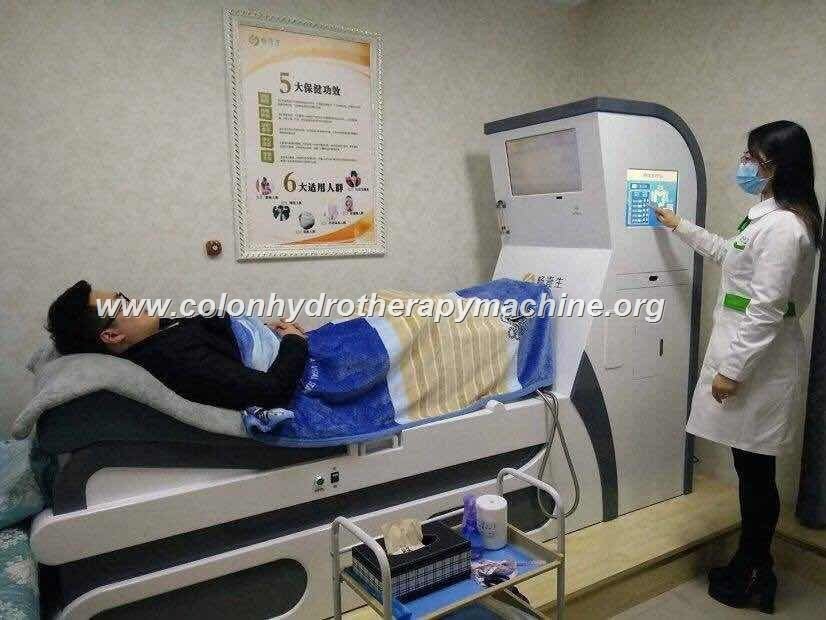
Dedicated treatment couches provide ergonomic support while integrating directly into specialized plumbing lines.
When clients ask what is a colon hydrotherapist, the role encompasses conducting pre-session screenings, operating hydraulic delivery consoles, monitoring client abdominal comfort, and maintaining strict sanitary standards. While independent therapist registers exist across Britain, colon hydrotherapy remains largely complementary, meaning facilities must independently verify the competence and practical training of their staff.
Operating Principles of Colon Cleansing Systems
A professional colon cleansing system operates by taking mains water, purifying it through multistage filtration cartridges, and heating it to physiological body temperature before delivery. Understanding how colonic machine works allows engineering teams to prepare appropriate water supply lines and electrical infrastructure. Fluid enters the bowel at low pressure, loosening impacted faecal residues and stimulating natural peristaltic contractions that prompt evacuation.
The workflow of modern professional apparatus typically follows a sequential, controlled progression designed to safeguard bowel wall integrity:
- Water passes through mechanical sediment filters and carbon media to remove particulate matter and chlorine compounds.
- An internal electric heating element warms the filtered water stream to a stable range between 37°C and 40°C.
- Trained operators introduce water via an intestinal chamber or speculum using calibrated gravitational pressure or peristaltic pumps.
- The introduced fluid hydrates intestinal waste, which flows out through transparent sight tubes directly into dedicated foul drainage lines.

Digital sensors monitor water temperature to maintain fluid delivery near normal core body temperature.
Direct-observation viewing chambers allow the operator to inspect effluent consistency, gas release, and fluid clearing rates during treatment cycles. Anti-leakage safety mechanisms, pressure relief valves, and non-return backflow assemblies help isolate the fresh water source from wastewater contact.
Comparing Open, Closed, and Gravity Cleansing Systems
Commercial colon hydrotherapy apparatus falls into three broad structural categories: closed systems, open systems, and gravity-fed configurations. Each configuration dictates the required room layout, plumbing hookups, operator involvement level, and client posture during the procedure.
Closed System
A closed system colonic machine uses sealed waste hoses connected directly from the speculum to the drainage pipe, containing odour and fluid completely while an operator manages valves.
Open System
An open system colonic machine incorporates an ergonomic basin couch where clients lie comfortably, allowing self-evacuation into a continuous drain while warm water flows through a narrow catheter.
Gravity System
A gravity colonic machine avoids electric pumps entirely, relying on an elevated water reservoir to generate gentle, hydrostatic pressure that enters the bowel naturally.
Closed equipment requires continuous operator presence to regulate infusion switches and observe effluent tubes throughout the appointment. Open systems provide greater privacy for the client, who remains covered on the moulded table while evacuation occurs naturally around the slender rectal tube. Gravity units offer simplicity and low mechanical maintenance but require adequate vertical wall space to mount water tanks at sufficient height.
Facility Infrastructure, Hygiene, and Plumbing Integration
Installing hydrotherapy apparatus within British commercial premises requires strict adherence to local water bylaws and building codes. Connecting any fluid delivery device to the municipal mains requires backflow prevention assemblies, such as fluid category 5 air gaps, to eliminate the possibility of back-siphonage into potable water networks. Plumbing installers must route discharge lines directly to foul drainage stacks using trap seals that prevent sewer gas ingress.
Facilities establishing a specialized treatment suite must also evaluate ventilation rates, floor drainage, and washdown wall surfaces to maintain strict infection control. Between appointments, operators must implement comprehensive disinfection cycles using hospital-grade biocidal solutions across all non-disposable components.
Never connect colon hydrotherapy equipment directly to potable mains lines without an approved Category 5 break tank or backflow assembly. Cross-contamination between foul drainage circuits and mains water lines poses severe public health hazards.

Plumbing installations require dedicated backflow isolation assemblies to protect potable water networks.
Procuring compliant fittings for a colonic machine UK installation involves verifying pipe diameters, water supply pressure, and dedicated 220V electrical spurs. Single-use speculums, sterile lubricant packets, and disposable waste hoses eliminate cross-transmission risks between consecutive appointments.
Technical and Operating Parameters for Professional Systems
Commercial buyers must review manufacturer technical datasheets to assess machine dimensions, tank capacities, and electronic control specifications before purchase. Reviewing verified physical dimensions helps architects allocate appropriate floor footprints for treatment couches and operator movement. When selecting a colonic machine, facility engineers must reconcile contradictory figures often found in preliminary promotional literature.
The following table outlines baseline engineering specifications for professional models such as the MAIKONG MK-880, alongside necessary technical notes on preliminary data supplied by overseas production lines.
| Parameter | Specification | Engineering Notes |
| Model Number | MK-880 | Reference model designated for commercial healthcare installations. |
| Voltage Supply | 220V-50Hz | Standard single-phase British commercial electrical supply. |
| Power Rating | 2kW / 2000VA | Supports internal rapid-heating water elements. |
| Water Tank | 10 Litres | Internal buffer reservoir for temperature equilibration. |
| Medicine Storage | 500ml Chamber | External scale cup for retention fluid dosing. |
| Temperature Range | 30°C to 40°C | Adjustable thermostat calibrated around 37°C body temperature. |
| Noise Level | Under 65dB | Acoustic insulation dampens internal peristaltic pump operations. |
| Device Dimensions | 1720x2500x690 mm | Physical footprint including integrated client treatment couch. |
| Net Weight | 160 kg | Solid structural metal chassis with acrylic panelling. |
| Water Flow Speed | 0 to 1.5 L/min | Fine peristaltic rate adjustment for bowel comfort. |
Buyers must note that certain preliminary manufacturer sheets mention secondary model codes such as the MAIKONG MK-ZCJK-830 alongside the MK-880. Additionally, figures citing a water pressure of “0.6Pa” represent obvious typographical translation errors that should be verified as bar or kPa ratings on final technical quotations. Respiratory references such as EN 149 standards must also be set aside, as they apply to protective face coverings rather than gastrointestinal hydraulic machinery.
Packaging, Delivery, and Logistics Specifications
International logistics for heavy medical equipment require robust packaging to protect sensitive digital electronics, heating elements, and composite acrylic body shells during transit. Units destined for the UK arrive securely crated in treated timber crates or reinforced industrial cardboard boxes. Wholesalers and clinics sourcing a colonic machine for sale should verify crate dimensions to confirm that external freight packages will pass through standard doorways and corridors.
Logistical parameters, standard carton dimensions, and dispatch timelines for single units and multi-unit commercial orders are detailed below.
| Logistics Item | Container Data | Handling Details |
| Package Type | Wooden Crate | Export-grade timber protection with moisture-resistant interior barrier. |
| Gross Crate Weight | 160 kg | Requires mechanical pallet truck or forklift for depot handling. |
| External Volume | 2.89 m³ | Modular multi-box dispatch available for restricted site access. |
| Sample Dispatch | 1 to 3 Days | Factory preparation for individual inventory evaluation units. |
| Batch Production | 5 to 10 Days | Manufacturing lead time for larger regional distributor orders. |
| Transit Options | Air or Sea | Door-to-door courier, international air cargo, or ocean freight. |
Buyers must note that preliminary reference sheets listing package sizes of “1720X2500X690 cm” represent millimetre dimensions recorded with incorrect centimetre units. Clear confirmation of actual crated volume avoids unexpected complications with domestic freight couriers and kerbside unloading.
Clinical Scope, Evidence Considerations, and Marketing Boundaries
Commercial marketing materials from equipment producers frequently use phrases such as “body detox”, “cancer prevention”, and “treatment of chronic ulcerative colitis”. Professional buyers within the UK must recognize that advertising authorities and healthcare regulators strictly prohibit using such statements without robust clinical evidence. Independent medical bodies emphasize that the human body relies on hepatic and renal clearance pathways rather than colonic irrigation to manage physiological wastes.
Healthcare providers use intestinal lavage primarily for preoperative bowel clearance prior to colorectal surgery or preparation for diagnostic colonoscopy. Within private wellness centres, clients seek irrigation primarily for temporary abdominal bloating relief and comfort management rather than disease treatment.
Colonic irrigation apparatus must never be marketed as a curative treatment for malignant disease or inflammatory bowel disorders. Operators must maintain transparent boundaries between subjective wellness comfort and verified medical practice.

Responsible facility protocols maintain strict boundaries between medical bowel prep and complementary wellness.
Assessing the broader colonic machine market demonstrates that professional practices thrive when they present services transparently, pre-screen for medical contraindications such as severe diverticulitis or bowel perforation risks, and avoid unscientific therapeutic claims.
Assessing Equipment Investment and Total Ownership Costs
Evaluating an equipment acquisition requires calculating the total cost of ownership rather than focusing exclusively on the initial invoice. Capital expenditure represents only a portion of the long-term investment, which includes water filtration cartridge changes, single-use speculum kits, utility consumption, and scheduled engineering maintenance. Calculating these operational expenditures helps operators establish sustainable service fees across their appointment calendars.
Reviewing colonic machine price benchmarks across international manufacturers reveals substantial variations based on build materials, integrated touchscreens, and included accessories. When researching the best colonic machine for a high-traffic clinic, procurement managers must compare recurring operating expenditures against upfront mechanical savings.
Initial Outlay Costs
- Factory machine unit purchase and international crating
- Air or sea freight customs clearance and domestic road haulage
- Plumbing installation, including Category 5 backflow tanks
- Dedicated electrical line installation and certified testing
Ongoing Operating Overheads
- Single-use sterile speculums, obturators, and waste hoses
- Replacement sediment, carbon, and ultraviolet filter media
- Medical-grade surface disinfectants and line-cleaning solutions
- Routine technical inspections and operator training renewals
Factoring in consumable spend per appointment prevents budget shortfalls after facility commissioning. Ensuring access to prompt technical support and local replacement parts lowers downtime risks if hydraulic valves require servicing.
MAIKONG Manufacturing Capabilities and Distribution Support
We at MAIKONG produce high-grade colon hydrotherapy equipment from our manufacturing facilities based in SZ, GD, China. Operating across an integrated supply chain with precision assembly tooling, we manufacture dependable commercial hydrotherapy devices designed to meet rigorous international expectations. We support healthcare institutions, natural health clinics, and beauty wellness operators with adaptable manufacturing capabilities that balance engineering precision with long-term cost efficiency.
Our production lines support comprehensive original equipment manufacturing (OEM) and customisation options for regional partners across the United Kingdom. We accommodate custom branding logos on console fascias for orders starting from 20 units, tailored exterior packaging from 20 units, and bespoke graphic interface layouts from 30 units.
Precision assembly lines in SZ provide consistent build quality and scalable custom manufacturing.
Every system undergoes rigorous mechanical assembly checks before export dispatch, accompanied by available ISO, CE, and SGS documentation. For buyers exploring our background and operational scale, detailed information is accessible through about maikong, while our logistics department manages direct sea, air, and express door-to-door delivery arrangements.
Establish a UK Distribution Partnership
Facilities seeking reliable commercial hydrotherapy equipment can connect directly with our international export department to request technical datasheets, quotation terms, and regional wholesale opportunities.
Technical Procurement Checklist for Professional Operators
Before confirming an order with an overseas manufacturer, facilities should conduct thorough due diligence across mechanical, environmental, and operational criteria. Verifying compliance beforehand prevents costly renovation delays and plumbing retrofits once the crated machinery arrives at the clinic.
While some smaller practices evaluate a home colonic machine for private residential wellness, commercial operators require heavy-duty installations capable of handling continuous multi-patient daily schedules.
- Plumbing Separation: Confirm that the premises can accommodate an independent backflow prevention air break tank complying with local water authority guidelines.
- Waste Discharge Capacity: Verify that drainage pipework provides adequate fall and diameter to receive rapid waste slurry discharge without hydraulic backups.
- Thermal Regulation Safety: Test that water heaters incorporate secondary thermal cut-off switches to prevent scalding risks during sudden municipal pressure drops.
- Operator Ergonomics: Evaluate whether the couch height and console placement permit the therapist to assist the client comfortably without physical strain.
- Consumable Compatibility: Confirm that the intake nozzles accept widely available standard medical-grade speculum hoses and accessories.
- Documentation Verification: Request current CE and ISO certificates alongside electrical safety test reports directly from the manufacturer before balance payment.
Frequently Asked Questions Regarding Colonic Systems
What is your minimum order quantity for commercial machines?
There is no mandatory minimum order quantity for standard equipment; single-unit sample orders are accepted to enable prospective buyers to inspect hardware quality.
Can clients order sample units to inspect equipment build quality?
Sample orders are welcome for technical evaluation, with mixed sample configurations available upon consultation with the factory engineering team.
What are the standard factory manufacturing lead times?
Sample preparation requires 1 to 3 days, whereas larger mass production runs for commercial orders generally take 5 to 10 days before export dispatch.
What warranty terms and technical support policies apply to purchases?
Equipment warranty coverage extends up to 3 years depending on the contracted service tier, supported by online technical diagnostics and replacement component supply.
Which quality and safety certifications are available for international delivery?
Apparatus is supplied with CE, ISO, and SGS documentation, and additional regional compliance testing can be applied for based on distributor requirements.
Can machinery be delivered directly to a UK commercial address?
Door-to-door delivery is fully supported using international sea freight, air cargo, or express courier services directly to your facility premises.
What payment methods are supported for international wholesale orders?
Payment terms support bank telegraphic transfers (TT), letters of credit (LC), and formal commercial bank contracts agreed prior to production.
Do you offer custom OEM branding and customisation options?
Custom manufacturing services are available upon providing technical drawings or samples, with custom logo and packaging options starting from 20 pieces.
Summary of Professional Colonic Equipment Selection
Investing in professional colon hydrotherapy machinery requires balancing robust hydraulic engineering, uncompromised backflow hygiene, and practical room infrastructure. Operators who prioritize thorough operator training, transparent client communication, and reliable factory support establish secure and sustainable clinical environments. Direct technical dialogue with factory engineers helps ensure your selected system matches your facility’s architectural and operational standards.