Colonic Machine UK Distributor | MAIKONG OEM Factory
About Us| Contact Us

Coffee enema: What UK spa owners must know before you offer it
September 25, 2026
Quick answer
You can consider offering coffee enemas in a UK spa, but only after two things are in place: (1) suitably trained practitioners and clear client‑screening and consent procedures, and (2) equipment whose technical safety features and consumables match your risk controls and local plumbing/electrical rules. Supplier materials we hold confirm machine parameters you should verify (voltage/power, flow and temperature ranges, inlet filtration, disposable guide‑head sterilisation and pressure safety), but they do not replace a local professional review of installation, consent or clinical scope. Request a full model manual and UK installation checklist before a trial or sale.
Contents
Quick evidence summary for spa owners (what supplier materials actually confirm)
From our product records we can identify measurable machine parameters you should expect a manufacturer to supply and confirm in writing. These include: instrument class (Class 2 Type B), declared electrical power (up to 2000 W) and wide input voltage (110–220 V, 50/60 Hz), an adjustable water flow range (0–830 ml/min), and a water temperature control range of 30–40 °C with a claimed ability to maintain about 37 °C ±2 °C. The same records list inlet filtration at 5 µm, single‑use disposable guide heads with irradiation sterilisation and a guide diameter of 0.6 cm, and a reported noise ceiling ≤65 dB. Please ask suppliers to put these numbers into the model manual you will receive with any quote.
Our files also indicate adjustable dosing and automated safety cut‑offs for common fault conditions (over‑temperature, low liquid level, timeout) and routine pipeline cleaning functions; these are features to verify on the specific model you plan to buy or hire.
Who should provide coffee enemas in a spa setting — practitioner skills and scope
This treatment is not the same as a typical facial or massage in terms of screening, infection control and potential adverse events. We advise that a spa only offers coffee enemas when the person delivering them has:
- formal training in colon hydrotherapy/advanced enema techniques or equivalent supervised medical training;
- competence in client screening (medical history, current medications, pregnancy, recent abdominal surgery, cardiac conditions and other contraindications);
- basic emergency response skills and an agreed escalation route to medical care;
- recorded consent procedures and aftercare instructions that the client signs.
If you do not already have such practitioners on staff, do not run trials without external training and a written scope-of-practice agreement. Local professional bodies and accredited colon hydrotherapy courses can supply training; check the course curriculum and practical assessment before relying on it for client safety.
Key machine features to check before you buy or accept a demo
When evaluating equipment, ask the supplier to demonstrate and document each of the following items on the model you will use:
- Flow control and range — confirm the model’s adjustable flow (0–830 ml/min as a supplier claim) and that the control is graduated or digital; verify that actual measured flow matches the spec.
- Temperature control and stability — the unit should show set and actual temperatures and be able to maintain approximately 37 °C ±2 °C within the stated 30–40 °C range.
- Pressure monitoring and automatic safety stop — real‑time pressure sensing and an automatic stop/alarm when limits are exceeded are essential for operator safety.
- Filtration on the inlet side (supplier-stated 5 µm) and accessible, maintainable filters or cartridges.
- Infusion controls and dosing — metered addition of liquid/“medicine cup” with visible scale and lockable dosing settings.
- Consumables and single‑use parts — disposable guide heads with declared sterilisation method and single‑use tubing where required.
- Cleaning and disinfection cycles — documented automatic or manual pipeline cleaning steps and validation recommendations from the manufacturer.
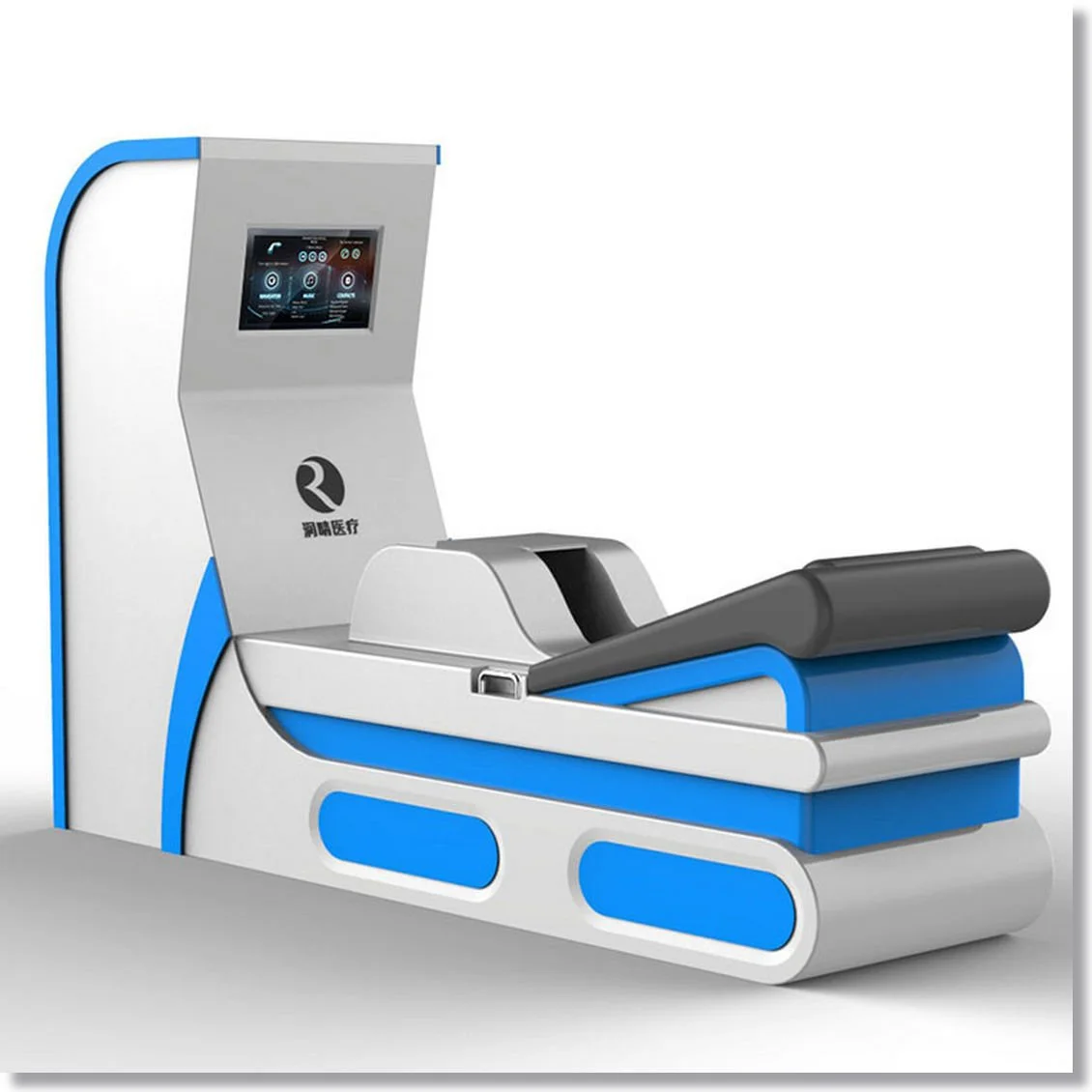
- Bed and waste design — whether the system integrates a washout basin, built‑in sewage or requires separate plumbing; this affects room layout and client privacy.
Practical technical parameters to request from suppliers (specify values)
| Parameter | Supplier‑stated value (model example) |
|---|---|
| Instrument class | Class 2 Type B |
| Power | Up to 2000 W |
| Voltage / frequency | 110–220 V, 50/60 Hz |
| Flow adjustment | 0–830 ml/min |
| Temperature control | 30–40 °C (maintain ~37 °C ±2 °C) |
| Inlet filtration | 5 µm |
| Disposable guide head | Irradiation sterilisation, diameter 0.6 cm |
| Noise | ≤65 dB |
Safety, hygiene and consumables: disposable guide heads, pipeline cleaning and filtration
Verify that consumables match your hygiene policy and waste stream. Our supplier materials state disposable guide heads with irradiation sterilisation and single‑use tubing; insist on manufacturer traceability for those items and an audit trail for each batch. Confirm the supplier’s recommended pipeline cleaning cycle (chemicals, temperatures, contact times) and whether the unit supports an automatic cleaning program or manual disassembly for professional cleaning.
Keep spare consumables on hand so you never reuse single‑use items. Record‑keeping for each treatment (which disposable head was used, serial numbers if supplied) is sensible for infection control and any future investigation.
Room, water and waste arrangements: plumbing, sewage and bed configuration to plan
The equipment options vary: some suppliers offer an integrated bed with an excretion basin and built‑in sewage handling, other systems require connection to mains cold water and a 1.5–2″ waste outlet or a dedicated sanitary connection. Before you commit, get from the supplier:
- a plumbing schematic for the model you will buy;
- the required water pressure and flow rate for the unit to operate as specified;
- waste connection type and whether an interception trap, macerator or direct sewer connection is required;
- recommended room dimensions, privacy screens and bed clearances.
Do not assume the unit uses only a standard basin trap—some configurations need a more substantial drainage solution. Confirm with your local plumber and the spa’s building manager before installation.
Electrical and installation notes (what to verify locally — evidence missing for UK wiring)
Supplier data lists voltage and power ranges, but it does not provide a UK‑specific installation certificate or wiring diagram tailored to UK electrical rules. You must:
- ask the supplier for the model’s full electrical schematic and installation manual;
- engage a qualified UK electrician to confirm whether a dedicated circuit, RCD protection or an isolator is required for the model and for the installation environment;
- check whether the spa’s mains earthing arrangement meets the manufacturer’s requirements;
- obtain a signed electrical safety checklist after installation.
We cannot substitute a UK electrician’s assessment; the supplier claims general electrical compatibility (110–220 V), but that does not remove local wiring and compliance obligations.
Training, consent and client screening your front desk and therapists must use
Practical minimums for the front desk and therapist include a triage script and a written consent form. Your triage script should flag recent abdominal surgery, inflammatory bowel disease, pregnancy, severe heart disease, anticoagulant medication, and any inability to remain in the required position for the duration of treatment. Therapists should record vital signs as required by their training and confirm informed consent before each session.
The consent form should list the procedure, expected sensations, possible common immediate reactions, emergency contact details and an explicit statement that the client has truthfully disclosed medical history. Keep records for at least the period mandated by your insurer.
Maintenance, aftercare and technical support expectations from a supplier
Ask the supplier for:
- a preventive maintenance schedule with consumable replacement intervals;
- a faults and alarms guide and the meaning of each alarm state;
- availability of spare parts and consumables in the UK or EU;
- the supplier’s technical support channels (our records list online technical support) and whether remote diagnostics are available.
Confirm warranty terms in writing and where the unit will be serviced under warranty locally. If the supplier ships from outside the UK, check lead times for parts and the cost model for on‑site visits.
A practical buying checklist for spa owners — the minimum information to include when requesting a quote
- Exact model name and full technical specification sheet (electrical schematic, flow and temperature graphs, filtration spec).
- Consumable list, pricing and sterilisation method for single‑use parts (ask for batch traceability).
- Installation drawings for plumbing and electrical connections suitable for UK approvals.
- Details of pressure monitoring, safety cut‑offs and alarm behaviour (describe how the unit behaves at over‑pressure or over‑temperature).
- Maintenance schedule, spare parts list and UK/EU support options.
- Declared certifications from the supplier (we declare ISO 9001, CE, ISO 13485 as company certifications — confirm these on the model paperwork).
- Delivery lead time, freight and any import or customs responsibilities.
- Training package content, assessment method and evidence of practitioner competence after training.
Direct next step: how to request a suitable configuration or quote
If you want a configuration tailored to a UK spa (plumbing integrated bed, or a standalone unit for an adapted treatment room), email us the room dimensions, available water pressure (bar), drainage type and the expected session throughput per day. We will respond with the appropriate model options and a configuration checklist for your electrician and plumber.
Contact for a configuration or quotation: Lucy@Colonicmachine.uk or WhatsApp/phone +8613510907401.
Short local disclaimer
This article is for information and operational planning only and does not replace professional medical advice or an on‑site technical assessment. Do not use it to diagnose or treat health conditions.
This content is provided for learning, information sharing and professional communication only. It is not medical advice and is not a basis for treatment or diagnosis. Confirm suitability, operation and purchasing requirements against the product manual, local regulations and qualified professional guidance.
Contact us online by Whatsapp:

Maybe you like also
Copy©2026-2027