Colonic Machine UK Distributor | MAIKONG OEM Factory
About Us| Contact Us

Practical wastewater handling for UK colon hydrotherapy clinics
October 19, 2026

Quick answer
If you are fitting a hydrotherapy room now, first confirm the available foul‑drain route and electrical supply, then choose one of three workable routing options: direct connection to an existing mains foul drain where permitted; a local macerator/lift unit if the soil stack is above the treatment level; or a lockable holding tank with licensed uplift if sewer consent or building constraints prevent discharge. Use the MAIKONG machine’s published plumbing and electrical facts (for example water flow 0–830 ml/min and supply 220V‑50Hz, see model data) to brief your plumber and water company so you get a single site‑specific quote rather than generic advice.
Contents
Direct answer up front — what to do now for a UK hydrotherapy room
We recommend this immediate three‑step approach you can implement today:
- Photograph the room: soil‑stack/soil‑vent location, floor waste(s), and measure invert levels and pipe runs to the nearest soil stack or external drain.
- Note the room services: confirm a 220V 50Hz supply and available circuit capacity (MAIKONG machines list power up to 2000W; see product data below) and record cold and hot water feeds.
- Decide preferred routing from the three practical options (mains drain, macerator/lift, holding tank & uplift) and ask your plumber to price the exact route using the machine’s peak flow and flush features so the correct waste fittings and traps are specified.
Why wastewater handling matters for a UK wellness centre
Waste from a colon hydrotherapy session contains both wash water and patient excreta. Local water companies and building control expect waste to join the foul sewer under the same controls as other clinical or non‑domestic discharges. If you assume a simple sink connection without checking, you risk: a rejected connection by the water company, an unsatisfactory macerator selection, or expensive rework to provide licensed waste uplift later.
Getting the routing right up front saves time, reduces installation change orders and ensures your room passes landlord and building‑control checks. The routing also dictates operational processes: daily drain cleaning, consumable disposal and whether you must engage a licensed waste carrier for uplift.
What MAIKONG machines already provide for wastewater and patient excretion
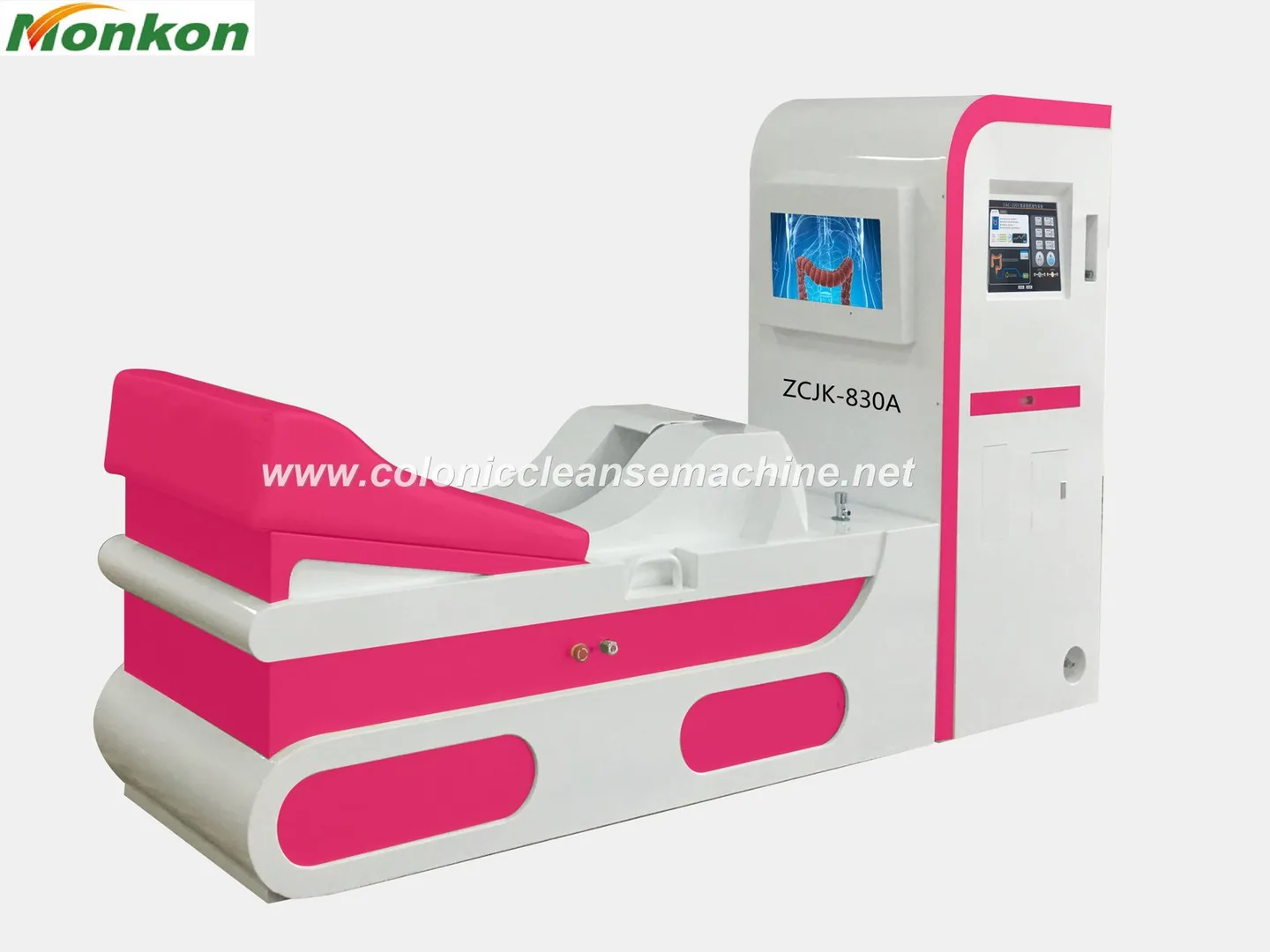
MAIKONG colon hydrotherapy machines are supplied as an integrated system intended for clinic use. Relevant features we rely on when planning drainage are:
Passing these exact values to a plumber avoids undersized traps, incorrectly rated lift units, or a macerator that can’t manage the machine’s flushing profile.
Three practical wastewater routing options for UK clinics
1. Direct mains foul‑drain connection
Where building layout and the local water company allow, the simplest option is a standard connection to an internal foul stack or an authorised building drain. This usually requires:
- A properly trapped and vented floor or pan waste at the machine;
- Building‑control approval for the new sanitary fitting if the bed/basin is a new fixture;
- Confirmation from the water company that the discharge is acceptable without a trade‑effluent consent (many routine sanitary discharges are classed as domestic).
Pros: lowest operating complexity and ongoing cost. Cons: depends on sewer access, landlord permission and local policy.
2. Macerator and lift pump
A macerator unit fitted immediately downstream of the basin chops solids and pumps waste to the nearest soil stack or external drain. This is the common solution where the soil stack is higher than the treatment level or remote.
- Electrical and emergency maintenance access must be planned for the pump unit.
Pros: flexible for basement or mezzanine rooms. Cons: added maintenance, potential for blockages if incorrectly sized, and noise or vibration to manage.
3. Holding tank with licensed uplift
If sewer consent is refused or you cannot access a legal drain, a sealed holding tank (lockable and vented) emptied by a licensed waste carrier is the fallback. It suits clinic conversions where modifications to the building fabric are restricted.
Pros: avoids immediate sewer works or landlord permission. Cons: recurring uplift charges, tank access and extra recordkeeping, and more complex hygiene protocols.
How to check your room and plumbing before you buy or install (simple site checklist)

- Photos and measurements: take clear photos of room, floor waste(s), soil stack, external drainage runs and plantroom access; measure distance in metres from the bed to the nearest soil stack or external manhole.
- Floor levels: note invert level of existing floor waste relative to machine outlet; record finished floor height.
- Ventilation and waterproofing: confirm floor gradient to drain, presence of waterproof floor covering and any secondary containment requirements.
- Services: record mains cold and hot water presence, and confirm a 220V 50Hz circuit capable of 2kW load and an RCD‑protected supply.
- Landlord and planning: obtain landlord sign‑off for new sanitary fittings and check if building control notice is required for plumbing alterations.
Sizing and flow guidance using MAIKONG machine parameters to brief a plumber

When you brief a plumbing contractor, give these machine facts verbatim:
Ask the plumber to quote for pipework, traps and either a macerator pump or connection to the nearest soil stack, and to confirm whether a backflow device, an inspection chamber or an air gap is required under local building regulations. Photographs and the exact flow value will reduce guesswork in the quote.
Hygiene, cleaning and daily waste‑management workflow your team should use
We recommend a simple, auditable daily routine:
- After each treatment, use the machine’s warm‑water flushing to clear the basin; staff then rinse visible residue with external wash water and complete a visual check.
- Remove and dispose of single‑use guide heads and clinical consumables per your clinical‑waste policy.
- If you use a holding tank, keep a log of uplift dates and volumes and ensure the tank is cleaned as part of the contractor’s scope. If you use a macerator, include weekly inspection and monthly service intervals in your maintenance log.
- Daily drain flush: run a short hot water cycle and approved biodegrading cleaner suitable for sanitary systems to prevent odour and biofilm build‑up.
Do not rely solely on the machine’s pipeline self‑cleaning; staff cleaning and scheduled maintenance are essential.
What to ask your local water company, building control and waste contractor
- To the water company: do I need a trade‑effluent consent or any pre‑approval to discharge wash water and patient excreta from this new sanitary fitting?
- To building control: does this installation require a building notice or an approval in principle for new sanitary connections or floor‑waste alterations?
- To a licensed waste contractor (if using holding tank): what container types, volumetric uplift frequency, documentation and tank‑cleaning schedule do you offer for clinical sanitary waste?
Collect short written responses or email confirmations so you can attach them to an installation quote and avoid later disputes.
Quick comparison: pros and cons of the three routing options for UK clinics
- Mains foul drain: Pros — simplest operation and low running cost. Cons — requires sewer access and permission, possible building control work.
- Macerator & lift: Pros — flexible where soil stacks are inaccessible. Cons — added maintenance, some capital cost and noise considerations.
- Holding tank & uplift: Pros — minimal building alteration, useful for leased premises. Cons — regular uplift cost, visible tank footprint and more administration.
Typical installation constraints that delay a quote and how to avoid them
Common causes of delay are: missing measurements (invert levels/distance to stack), no landlord permission, unclear electrical supply details, and absence of written guidance from the local water company. You can avoid delays by preparing the site checklist above and sending photos and the MAIKONG machine spec sheet to your plumber and the water company before they visit.
Sizing quick‑reference table (MAIKONG models)
| Model | Water flow range | Power | Size & weight |
|---|
Provide this table to your plumber so they can confirm appropriate trap diameters, macerator duty cycle and any lift‑pump sizing requirements.
One‑step next action: how to request a site‑specific wastewater configuration quote
To get a precise configuration quote from us, send the following by email or WhatsApp with photos attached:
- Room photos showing soil stack, floor waste(s) and pipe run direction.
- Measurements: distance (m) to soil stack or external drain, invert height(s), and finished floor level.
- Supply notes: available electrical circuit (voltage/amp), and hot/cold water access.
- Your preferred routing option (mains/macerator/holding tank) or ask us to advise.
We will respond with a bespoke drainage recommendation and an installation brief you can give to your UK plumber or building control officer.
FAQ (short)
Do I always need a macerator?
Not always. If the machine can discharge by gravity to a permitted foul stack at a correct invert level and with appropriate traps and vents, a macerator is unnecessary. Use a macerator when the stack is above the bed level or distant.
Will connecting to the sink suffice?
Generally no. Standard sink connections are sized for domestic greywater and may not be acceptable for clinical sanitary fittings; confirm with your plumber and the water company.
Risks and limitations
This article summarises common routing choices and uses MAIKONG product specifications to show what information to pass on to your contractors. Local water‑company rules, land‑lord covenants and building‑control decisions vary; they determine the final permitted solution. We do not provide legal or regulatory approval — obtain written confirmation from the relevant local authority before starting work.
Contact for a site‑specific quote
If you are ready, email us the site photos and checklist items at Lucy@Colonicmachine.uk or call/WhatsApp +8613510907401 and ask for a wastewater configuration quote for your UK clinic. We will use the machine parameters above to prepare a planner brief you can hand to your plumber.
MAIKONG declaration: our product information (flow range, power, filtration and configuration features) is supplied from our product records and should be used to brief contractors; pricing and final installation scope require a site visit and written quote.
Local compliance note
Please treat this guidance as non‑clinical installation advice. It is intended for health‑management and planning purposes only and does not replace professional medical, legal or building‑control advice. Do not use this article as a substitute for clinical protocols or regulatory approvals.
This content is provided for learning, information sharing and professional communication only. It is not medical advice and is not a basis for treatment or diagnosis. Confirm suitability, operation and purchasing requirements against the product manual, local regulations and qualified professional guidance.
Contact us online by Whatsapp:

Maybe you like also
Copy©2026-2027